Tuesday, January 24, 2012

Balanced eating - A healthy way of Living

Ayurveda, a science of life considers the health as a primary aim of life. To fulfill the four basic purposes of life which are Dharma (the duty) Artha (material gain) Kaam (to fulfill desires) and Moksha (Salvation), health is an essential tool. Without a sound state of health none of such purposes could be solved. For that matter, even any other purpose could not be fulfilled, if any. Physical body has been considered as a building which stands erect on a tripod of three essential commodities. Ahaara (food), Nidra (sleep), and Bramcharaya (celibacy) are these three pillars of life. 
It is important to understand the sequence in which these three pillars have been mentioned. Ayurveda asserts a great deal of importance to the food as one of the most essential contributes to the health. It is sad that we do not pay any thought before eating and use our food as an entertaining item of the life. Acharaya Charaka says, “Matraashi Syaat.” It means that one should eat in appropriate quantity. Though, it is difficult to exactly quantify the food in general because individual requirement remains different, however one needs to realize his/ her own need. Contrary to the general belief of eating specified number of calories, quantity of food is directly proportionate to the physical exertion of an individual.
Consumption of food depends upon multiple factors like, 
  • Time of consumption 
  • Quality of food 
  • Type of the food 
  • Processing of the food 
  • Combinations of the food 
  • Sequence of eating 
  • Age and type of physical exertion of the consumer 
  • Season
Coming back to the point of Matra (quantity) of the food, Acharaya Charaka says, “Ahaar Matra punah Agnibala apekshani.” It means, quantity of the food which should be consumed by an individual should depend upon the state of his/her digestion. Quantity of the food that digests properly in stipulated time without harming the constitution of an individual should be considered as an appropriate dosage of the food. 

Ahara Matra (quantity of the food) also depends upon the quality of the food to be consumed. Generally food items could be divided in two groups Guru (heavy to digest), and Laghu (light to digest). Guru Ahara could be defined as the food item which takes longer time to digest even if consumed in a lesser quantity. For example red meat, pork, fermented food products, rice, black lentils etc. While Laghu Ahara could be defined as food which is easy to digest and does not harm digestive fire even if consumed in large quantities. Relevant examples of it could be Moong Daal (green lentils), pop corns, brown rice etc.

The idea of understanding this concept is that one should consume heavier food items in a lesser quantity. Because being predominant of earth and water quotient they tend to increase doshas in the body. While lighter food items though gets digested easily, but predominance of fire and air elements in them may increase Vata and Pitta dosha. Ayurveda recommends that both of the qualities should be consumed in moderate quantity in order to strike equilibrium among the trinity of the biological humors. 

“The one who consumes food in appropriate quantity enjoys a sound health, well nourished metabolic factors, good complexion, contentment, and long life,” said Acharaya Charaka. Food consumed in proper dosage becomes an absolute remedy to the health.

Sunday, January 22, 2012

Ayurveda speaks - watch your Clock

Ayurveda, an ocean of never ending wisdom states that one has to plunge deeper to get precious pearls out of it. One can never understand the essence of the science by fragmentary understanding of the matter. It is a life of science, which is based upon self experiences and strong observations. Ayurveda theory is based upon five basic elements of cosmic evolution which are Ether (Akash), Air (Vayu), Fire (Teja), Water (Jala), and Earth (Prithvi). These five elements join each other in different permutations and combinations to evolve three biological forces called as Vata, Pitta, and Kapha. They are the trinity of biological humors that regulate our body when in equilibrium, and also result in diseases when get vitiated.
Biological humors coexist in the body in such a fashion that they do not hinder each other’s functions and simultaneously control each other in order to perform desired physical and physiological functions. Being primary constitutive factors of the body, they are directly influenced by our conscious or subconscious actions. Having said that means even a smallest change in our life style has an impact over the positioning of these Doshas. Trinity of Doshas also gets influenced by time and predominate each other at different parts of the day and night. This natural fluctuation of Doshas maintains our health and regulates our physiological routine. Ayurveda explain it as Natural Biological clock.
If we divide 24 hours in day and night, individual dosha has four hours of predominating cycle. Each dosha increases for four hours during the day cycle and repeats the same during night. This cycle is directly proportionate to the physiological performance of the body. For a better understanding, this clock could be understood as,
In a Day cycle:
  • From 6 am to 10 am Kapha predominates
  • From 10 am to 2 pm Pitta predominates
  • From 2pm to 6 pm Vata predominates
In a Night cycle:
  • From 6 pm to 10 pm Kapha predominates
  • From 10 pm to 2 am Pitta predominates
  • From 2 am to 6 am Vata predominates
One needs to have a fair understanding of this biological clock of the body to regulate the daily routine and maintain life style accordingly. For example, at night cycle Kapha predominates between 6 am to 10 pm. Kapha or adhesive force of the body is also responsible for inducing sleep. Ancient wisdom recommends sleeping during this Kapha predominant phase in order to experience a peaceful sleep. Once this time is elapsed, follows the predominance of Pitta phase. Pitta also depicts enlightenment, awareness which also suppresses the natural urge of sleeping. It makes the mind alert again, even if you are physically sleeping or feeling sleepy.
Understanding your biological clock can help you to deal with minor daily niggles with ease and helps to maintain a disease free life. It is just a walk towards the general principles of life to live in harmony with your inner peace. Ayurveda suggests that one should constantly engage in learning new things, because “the true knowledge is a power, rightly said.”

Saturday, January 21, 2012

Cervical Spondylosis & Ayurveda - Manage pain with care

Today, the lifestyle which we lead is full of stress. The rat race of our world is taking us away from our natural habits and pushing us towards a life filled with disorders which is directly related to our way of living. One such example is cervical spondylosis.

Traditionally, cervical spondylosis was considered a medical condition in which the degeneration of the inter-vertebral disks occurred due to old-age. However, today this condition is commonly caused due to regularly ignoring the ergonomics of our bodies, e.g., working for long hours with computers, wrong postures while performing day-to-day life functions, sports/repetitive injuries such as long hours of playing video games, texting etc. Spondylosis could be defined as the degenerative osteoarthritis of the vertebrae.

Based on the area of degeneration Spondylosis can be of various types:

· Cervical Spondylosis: The most common form of spondylosis, because of our stressful living, it includes the region around the neck column and is characterized by severe pain and/or restricted movement in the head, neck, shoulders, arms and hands.

· Lumbar Spondylosis: When the vertebrae of the lower back/lumber region are compressed, due to a repetitive injury or poor posture, this results in lumbar spondylosis. This form of spondylosis is characterized by pain in the lower back.

When the space between two joints reduces, it may generate a compression over the corresponding nerve root resulting in Radiculopathy characterized by referring pain, giddiness etc.

In modern sciences, there are two approaches, conservative methods or corrective surgery, through which cervical spondylosis is treated. The conservative approach is most common, involving treatments such as physiotherapy, massage, acupressure, acupuncture, patient awareness in correct postures, exercising, yoga, and/or non-inflammatory medicine. Surgery is recommended for patients who do not show improvement in their symptoms with the former approaches, however, it is still controversial.

The traditional science of Ayurveda approaches the treatment of cervical spondylosis differently. In Ayurveda, a healthy body has an equilibrium of the three doshas Vata (Movement), Pitta (Change) and Kapha (Growth and Stability). Any disease is a direct result of the disturbance in this balance. Cervical Spondylosis is a condition which is predominantly caused due to vitiation in the Vata. It is related to Sandhigata Vata. When increased vata dosha gets localized in the Manya (neck) region, it produces dryness which results in excessive rubbing of two joints resulting in degenerative changes in corresponding joint.

Ayurveda recommends a comprehensive conservative line of treatment for managing cervical Spondylosis. As mentioned for Vata Vyadhi, oleation is the mainstay of the treatment. Internal and external oleation is recommended. For Vata Vyadhi, Basti have been mentioned as a treatment of the choice. It depends upon the understanding of an experienced Physician to plan judicious treatments for the management of degenerative changes of the spine. Hot fomentation using hot herbs helps to release the compression from the spine and restores blood circulation. Increased blood circulation to the area of inflammation promotes the recovery. Combination of physiotherapy along with Panchakarma treatments yields very good results. Physiotherapy also helps to restore the natural posture and decreases the chances of recurrence.

Alternative system of health and world’s most primitive science can create a world of goodness to the mankind if adopted with faith and patience. For further information and queries, feel free to ask your Ayurveda Physician. Adopt a healthy life style, live happily.

Tuesday, February 22, 2011

Ayurveda – The rising of a new world

Since the time ancient civilization earmarked itself on the pages of history, chronicles related to the development of ancient system of healing could well be found scattered around various texts. It is evident from the time immortal that quest of longevity is deeply inscribed in the mind of human beings and adopting a healthy life style including the freedom from life threatening diseases remained on the top of the agenda through out the evolution of mankind. When history was first written on the pages in form of a script, along with the furtive of evolution were penned down the secrets of healthy living for the references of ancestors. Vedas are full of such kind of wisdom. It was the time when such references were used and various parts of information were brought together in form of an authentic knowledge by some of our eminent sages to establish the holistic system of healing. As far the history concerned, Ayurveda is all about the wisdom arising from the constant observations and a science purely based upon the self experiences. The principle of five elements and theory of evolution are an example of strong metaphysical understanding of the mass. Induction of massage coating an example of moulding a strong wood with constant smearing of oil followed by hot fomentation is another excellent piece of mind application.

It was a discussion amongst some altruistic sages that brought out the best and the oldest system of medical fraternity who were worried about the decline of the social health around the globe. Acharaya Bhardwaj was the first among those who professionally started imparting Ayurvedic wisdom to his immediate descendant Acharaya Atreya, and the latter took an initiative to set up the first school of Ayurvedic Medicines. It is the time when Ayurvedic wisdom which was transferred orally until now took a form of written scripture. Agnivesha, a student of Acharaya Atreya framed his knowledge in form of a text and his work was upheld across the arena of intellectuals. He named his book as Agnivesha Tantra. Till date the book remains the main pillar of Ayurvedic wisdom and is famous by name of Charaka Samhita. It is mandatory to mention the probable time of this creation at this point, which dates back to astonishing 2500 B. C. back. Only the legacy of Agnivesha who is least rewarded for his work sustained the time and till date benefiting the man kind.

While the conservative system of medicines developed to its heights of success, at the same time land of snake charmers gave rise to another legend in the field of operative medicines – the Sushruta. With his excellent and mind boggling surgeries, he laid down the foundation of Modern surgery. He is the one to innovate the famous lithotomy position widely used across the globe. He again has the famous incision point under his belt for eye surgery, and no doubt why he is father of modern surgery today. It was his own legacy that he dared to successfully operate under the non availability of strong and reliable anesthesia. Both of the branches vis- a vis Ayurvedic Medicines and Surgery developed together and wrote a new script of success with a vision of futuristic social health. Later it was well carried upon by then gallant human beings, that by virtue of their hard work they laid a foundation of modern pharmacology and pharmacogonosy. It is the time of Acharaya Vagbhatta and other eminent sages, who went into the field of research and intensive pharmacological evidence in form of Nighantu and other texts are available till date. At the same time when other fields were developing in the field of traditional medicines, a new lease of idea gave birth to the development of alchemistry; a branch of medicine that deals with the study of metals and their property of healing. Mercury, the most poisonous metal was used to cure the life threatening diseases. None the less, this art was also used to create the lost wealth of then spend thrift kings by turning mercury into the Gold. Ayurveda, considered as Ashtang comprised of eight fully developed branches having their own specializations. The maestros of the field left back their footprints in form of their written scriptures on papers for their descendants, alas! Hardly could be restored and saved; thanks to the lack of print and electronic media, and also to the generations riding high over money making machines at the cost of their own health.

While knowing my own roots, I came across an interesting story about the name of Kangra town situated near to the famous hill station Dharamsala, it is also the abode of Goddess Durga – Bajreshwari. The place used to be called as Trigarta (valley covered on three sides by peaks) or Nagarkot. There lived a family who was engaged in the business of stitching the torn earlobes of the ladies fancying heavy metal rings. They were so good at the business that later the place itself came to be known as Kaan Gad in local language which means to stitch ear lobe. Due to the ease of pronunciation it became Kangra later. How true the story is, nobody knows but it left a great deal of impression on my mind about a family that had the courage and skill to change the fate of a dynasty.

A system that fulfilled the medical and social demands of man kind had its downturn not because there was a fault in the system but just political reasons were enough to destroy the wealth of the wisdom. Foreign invaders, wherever they came from had an agenda of destroying rich Indian culture and heritage. Nalanda University, then abode of the knowledge was set on fire which kept on burning for entire 6 months turning the knowledge into the ashes. Few of them took away the literature for their sake, and left a big lag. Even before that with up rise of King Ashoka, Ayurveda Surgery had to bear a major set back. Once the king turned Budha, all the surgeries were banned and anyone who practiced it was held responsible for prosecution. Many of the eminent personalities shirked their shoulders from the profession to avoid social embarrassment. Adding an insult to the injury, while British invaded India they slapped everything they had on India, and Indian culture

As the evolution rode over the fast track of development, and the world saw a major power shift from east to the west, India started looking tame in its own boundaries. British rule in India made life difficult f

or the survival of its heritage and the way western system of healing was pasted over Indian society, played a major role in uprooting the age old system from the land of its own. Faster results produced by the western system of healing lead it to the top priority in the world of healing, and the lack of evidence based practice further pushed Ayurveda on the back foot. It was also the reason that developed nations refused to accept Ayurveda as a medical system and it ended up in a folklore practice only.

Also was the fascination of top authorities of this nation to please the developed countries and to keep dancing on their tunes that further deteriorated the image of this system and much of the credit goes to the practitioner of this science also, who felt privileged to be called upon Doctors instead of Vaidyas.

But, life is like a clock and the one that goes down has to rise in any circumstance. The might of Ayurveda could never be denied and the science that has the strongest basic principles rises again just like phoenix. The world realizes once again that being healthy is a bliss, and it is far better to maintain health than spending your hard earned money over an illness; and that is what the aim of Ayurveda is, “swasthasya swastha rakshanam i. e. to maintain the health of a healthy being.” Ayurveda, a science of life stresses upon adopting a healthy life style in order to avoid potential health hazards, and incorporates daily and seasonal regimens of well being, and one should always put constant efforts to follow the simple advises in order to remain healthy.

Sunday, September 12, 2010

Diabetes – a life style disorder

Ayurveda an age old science, explains this disease as Prameha wherein the prime symptom is excessive and frequent urination. As per Ayurveda Prameha is a disorder primarily related to the various abnormalities associated to the urination which further leads to a group of metabolic disorders(Prabhut avil mootrata). Diabetes- a Greek word that literally means fountain/ tap, was later associated to a disorder characterised by excessive production of the urine, there on a word mellitus was added to it which means honey. Sushruta- father of modern surgery explained the similar disorder much before the origin of modern medical science, and named it as Madhumeha. The word is made up of two words, Madhu – honey, Meha – Urine.

One can get the idea of similarity between two disorders explained by two different systems of medical sciences. Madhumeha is a disease in which subject frequently secretes a lot of urine (polyuria) with increased thirst (polydypsia) and associated with increased hunger (polyphagia). As per Ayurvedic methodology of diagnostics, it is decided depending upon clinical symptoms with a thorough urine examination. Charaka explained an easy methodology of diagnosing this disease based on a prodromal sign wherein ants are attracted to the urine of the patient.

Diabetes, which is generally considered as a life style disorder; caused by excessive consumption of unplanned and unwholesome diet associated with excessive sleep or non physical exertion, as per Charaka (Asya sukha, Swapna sukha…). By mentioning above causative factors Charaka might have predicted the modern life style which could be realized by prevalence of this disease in urban part of the world. Adding further to the list of causative factors, it includes excessive indulgence in the food which is rich in fat and quite heavy to digest for a prolonged duration, which is again a style icon of urban population which includes a fascination for junk food with carbonated beverages without much physical exertion. No doubt that Ayurveda also considers this disease as a genetic disorder (Beej Dosha). All such factors leads to vitiation of the Kapha (water metabolism) which in turn results in Prameha or diabetes.

Ayurveda classifies Diabetes in 20 types which actually emerge out of their individual dosha vitiation viz- a- viz from Vata, Pitta and Kapha. Sushruta being first to identify Madhumeha, which arises due to the predominance of vata dosha is a peculiar form of prameha in which sufferer frequently passes large amount of sweet urine and have been enlisted among the incurable diseases. Having said incurable, Madhumeha/ Diabetes comes under the diseases that need to be managed with continuous and through efforts through out the life span. It becomes incurable due to the involvement of all three doshas, meda, Rakta, Shukra, Ambu (water portion), Vasa, Lasika, Majja, Rasa, Oja (Sap of life), and Mamsa which are called as ten vitiated factors (Dasa dooshya). So it is extremely important for the patients, who think that swallowing a pill will cure their diabetes and they can eat anything and everything, to follow the proper dietary advice in association with proper exercise regimen.

From the point of view of treatment, Ayurveda classifies diabetics under two divisions, 1. Obese and strong, 2. Emaciated and weak. Category second is advised to be treated by improving their nutrition and lifting up their absorption level by judicious use of food supplementations and medicines. This kind of patient should be avoided for deep cleansing therapies until unless his general health condition is improved remarkably. While obese and strong patients should be subjected for the oleation (if necessary) and fomentation followed by deep cleansing by means of Vamana (induced vomiting) or Virechana (induced purgation). Once the through cleansing is achieved, patient is again kept on balanced diet to control the disturbed physiology.

Generally barley is considered to be helpful for maintaining and avoiding Madhumeha. Barley flour could be mixed with wheat and gram flour to be consumed in the form of baked bread. Fenugreek seed powder or sprouts can be used to achieve an additional effect in maintaining Madhumeha. Sushruta suggests a judicious use of Shilajeet to control Madhumeha. One must understand that Diabetes management treatment should be done under the strict supervision of a qualified Physician only and a regular check on Blood Glucose level is must. Chronic Hyperglycemia results in serious and long standing effects on other organs of the body and may also lead to Diabetic Neuropathy.

Thursday, September 2, 2010

Osteoarthritis – An Ayurveda Management

Osteoarthritis which is a common suffering these days could be compared to Sandhi gata vata from Ayurveda’s perspective. Though it is difficult to have a comparative study of two very different systems, but for the ease of understanding and to bring the best out of the two system for achieving a common a goal of curing the ailments, an integration is not a bad idea. Osteoarthritis is a disease characterized by a group of mechanical changes with the degeneration of joints. It is a prevailing disorder in old age people, wherein level of calcium degrades due to an effect of ageing, but other factors like life style, food habits etc. are also equally responsible for the prevalence of this disease.

Ayurveda describes a long list of causative factors responsible for Sandhi Gata Vata. As the name suggests, it is a disorder generated by excess Vata thus also known as Vata Vyadhi. Though vata vyadhi is quite a comprehensive term and it is a group of diseases created by increased Vata out of which one that affects joints specially weight bearing articulations is named a Sandhi Gata Vata. Meaning of word Sandhi is Joint or articulation.

Sandhi Gata Vata can affect any of the joint, but mostly large weight bearing joints like hip, knee and ankle are affected. Vata, which is a factor chiefly responsible for the mobilization in the body when increases in excess starts degenerating the body by means of its property of absorption. Symptoms of increased Vata can be viewed by signs of dryness over the skin, wrinkles, loosening of the joints, muscle wasting, poor strength etc. As per Ayurveda, causative factors responsible for the vitiation of Vata are, too much consumption of food which is dry in nature, and light to digest, to eat small quantity of meals which is insufficient for the body for a prolonged duration, too much involvement in sexual activities, to consume insalubrious diet, to wake up late night and to remain hyperactive and physically involved without taking enough rest. Chronic indigestion, malnutrition, excessive travelling are also few factors responsible for the vitiation of Vata Dosha. Trauma, excessive bleeding, chronic stress are also few other factors that increase Vata. Vitiated Vata when enters into the channels, it initiates many ailments related to Vata, and one of them is Sandhi Gata Vata.

Sandhi Gata Vata mainly represent symptoms pain and stiffness in the joint that may or may not increase with exertion. The joint makes a peculiar crackling sound while moved which is also called as crepitus. Swelling of the joint after exertion with or without the signs of inflammation can also be seen. Sandhi Gata Vata mainly affects spine, hip, knee and ankle joints which undergo a lot of wear and tear generated by body weight.

So obese people are at more risk of having osteoarthritis. Generally pain increases with cold and patient feels relieved by hot fomentation. Diagnoses can be established based on history and clinical examination. X- ray can consolidate the diagnoses and a typical OA(knees) X- ray film shows degenerative changes in the knee joint with joint space reduction and osteophyte formation in the joint.

Management of Sandhi Gata Vata from Ayurveda’s perspective is quite interesting and effective as well. One needs to rule out the involvement of the toxins (ama). Ayurveda reveals that sometimes Ama involvement with excessive Vata generates similar symptoms to the Ama Vata and could be quite confusing to diagnose, this state is called as Sama Sandhi Gata Vata. In such cases fasting remains the first line of action and it is necessary to bring it to the state of Nirama that is free from the toxin. There on line of action remains Oleation and fomentation to the joint, which could be done with the help of Panchakarma. Specific herbal oils are used for the purpose of oleation followed by fomentation with the help of herbal decoction prepared with the herbs that pacify Vata and also relieves the pain. Herbs like cida cordifolia (Bala), Gingiber offcinale (Shunthi), Cedrus deodara (Devdaru) are few that also helps in Sandhi Gata Vata. Food and nutrition is an aspect that can not be set aside while treating osteoarthritis. Life style needs to be corrected to achieve maximum result. It should be kept in mind that it is of utmost important to manage OA and if managed earlier it is better.

Tuesday, August 31, 2010

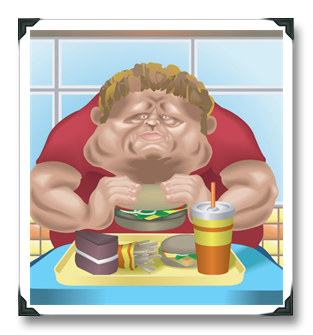
Obesity – a problem of plenty

Obesity, that has a problem of plenty is growing rapidly across the globe. It is a condition where body weight increases to an excess where it may affect general body health condition. Ayurveda has enlisted this disease in those which are treated with difficulty. Medoroga as named in Ayurveda, not only creates a social stigma but also increases the likelihood of various ailments like diabetes, hypertension, arthritis etc.


Calculating your Body Mass Index(BMI) can help you to define your health condition by comparing your height and weight. BMI is just an estimation and does not represent a clear idea about your total fat percentage. But definitely it helps to get an idea when the bell rings. BMI can be calculated with the help of simple formula:-

BMI = weight [in kilos] divided by height [in meters] X height [in meters]


Body Mass Index weight categories and conclusion


BMI rating

Weight assessment

Under 20 (men)

Under 19 (women)

Underweight

Underweight

20 – 24.9

Normal weight

25 – 29.9

Overweight

30 & above

Obese

Management of weight is a more psychological game play than just following a regular routine. Causes of obesity are more attributed towards a sedentary life style and in certain cases due to a long standing illness for which patient had been treated with specific drugs. Family history, bad food habits, and genetic factors can not be ruled out too. But more often it has been seen that in the beginning patient does not take his/ her weight seriously and once the vicious circle of fat manufacturing starts in your body, it becomes difficult to reverse the changes.

Before going for weight reduction mental make up and a strong belief is utmost necessary. Crash diet course should be avoided strictly, they may result in sudden weight reduction but regaining of it also occurs at the same pace. It is advisable to calculate Basal Metabolic Rate (BMR) before deciding your diet. It is the minimum caloric requirement needed to sustain life in a resting individual. One can calculate his/ her BMR with the help of following formula:

For Women

BMR = 655 + (9.6 X weight in kilos) + (1.8 X height in centimetres) – (4.7 X age in years)

For Men

BMR = 655 + (13.7 X weight in kilos) + (5 X height in centimetres) – (6.8 X age in years)

Based on above calculation, one can calculate his/ her approximate daily calorie need.

  • Sedentary life style/ little or no exercise, calorie requirement = BMR X 1.2
  • Lightly active individual(mild exercise 1- 3 days/ week), calorie requirement = BMR X 1.375
  • Moderately active individual (moderate exercise 3 – 5 days/ week), calorie requirement = BMR X 1. 55
  • Very active individual (hard exercise 5 – 7 days/ week), calorie requirement = BMR X 1. 725

Depending upon your BMR one calculate the daily need of their required calories and accordingly fix their dietary needs. Though, one must understand that it is not absolute food that have been your enemy thus far but a proper check on daily schedule is also equally responsible for such a high rate of obesity. Late night parties and excessive consumption of alcohol with smoking are other factors also contributing to the urban obesity. It has been reported that number of obese patient are increasing at an alarming speed in urban livelihood. generation next life style and sedentary habits from the childhood are also adding on to the childhood obesity. Kids are more interested in computer games and lack of interest in games involving physical exertion leading to the disastrous health hazards. It is indeed very important to keep a close check on your weight at the time when it hits that important mark where daily wears stop fitting your body. And it is always better to stay fit rather than running from one store to another to find your size.

Monday, August 30, 2010

Rejuvenation in Himalayas

Life in the metro getting hectic day by day, and daily physical involvement in meeting everyday new targets takes a toll on the body. It not only affects the physical body, also has a bad effect on mental well being. High society culture and sedentary life style generates life threatening diseases. Waking up late nights to catch your friends in the name of socializing and again rushing to the office early morning to reach in time takes out the vital energy from the body. When we have holidays we have to meet our dear ones and the whole time of leisure flies away treating your guests at home. Many factors come along together and your health remains on the back burner. Isn’t it a nice idea to go on a holiday where you can spend some time with yourself and pay full attention to your body, mind and soul?

Kayakalp in Palampur, Himachal Pradesh is a perfect destination for your long awaited health break. Come and recuperate yourself in the vicinity of Himalayas. Kayakalp is situated in the foothills of Dhauladhar range of Himalayas and it makes a picture perfect view in the winters with snow covered mountains peaks in the backdrop of a state of an art structure. An abode of traditional and alternative system of drugless therapies like Ayurveda Panchakarma, Naturopathy, Yoga and Physiotherapy are ready to enrich your health. A perfect blend of treatments, diet therapy with a hint of revitalizing touch of yoga makes a wonderful experience. A young team of enthusiastic Doctors welcome you with a refreshing smile and bid adieu with a promise of a better health condition of yours. Restricted regimen of diet offers you a step closer to the journey of your well being.

At Kayakalp, we offer you to get engaged in your hidden talents and occasional talks and leisure activities are conducted to display your creativity. Recreational hall offers you to spend your time with games and audio visual entertainment. Here you meet people from different arena of life and stay here as a part of an extended family.

We offer you different accommodations suiting best to your budget like dormitory, standard double bed room, deluxe double bed room, A/ C and non A/ C cottages. A prior booking is must to avoid hassles. Kayakalp at Palampur is well connected to the world by all modes of transportation like road, air, and train as well. You can have a joy ride from Pathankot in deemed to be heritage toy train. Though the travel could be quite slow but offers you a very different experience altogether. Daily flight is also available from New Delhi airport to Gaggal at Dharamsala and there on a taxi to Kayakalp is easily available which is just an hour from the airport. Himachal Pradesh always has to offer something different in all seasons and Kayakalp ensures you a perfect delight.

For more information you can log on to our website www.kayakalppalampur.com

Come and get involved with yourself. 

Sunday, August 29, 2010

Spirituality – The Quest


The world of twenty first centaury is growing faster than expected, and at the same pace are growing, the desires of the man. But at same speed something very different is also happening on the back stage of physical realm, the spirituality. Gone are the days when spirituality used to be defined as spinning beads and going for pilgrimage. Also, over are the days visiting holy shrines in search of the peace. The new age philosophy is to find out peace within them. Though the same old forgotten science but realized at the right time. The time is ripe to segregate spirituality from religion.
One needs to understand the fact about the existence of God. Each and every holy book demonstrates the presence of the divine within oneself. It is a psychological realm of the higher being – the conscious. Age old philosophy of Sankhya, which describes the evolution of the universe based on two factors, the Mother Nature – phenomenal realm of the matter, and the purusha – the conciousness. Prakriti, under the influence of three qualitative forces with the stimulation of the higher conscious goes on multiplying for the manifestation of the physical world. purusha – the higher conscious is not a causative factor for evolution but the Prakriti. Under the influence of the physical boundaries, the conscious which is unattached and pure, believes itself to be the part of it only.
Moksha – the salvation is the process of realizing this pure consciousness in oneself, which is beyond the physical realm of the matter. Spirituality is a journey onto the path of self realization and it has nothing to do with any religion. Thus far by most of the people, spirituality was taught as a part of religion and it lead to lot of chaos than resolving the quest of the human being.
Today, the mantra is all about self introspection. Yoga helps in finding the tranquility of the mind which is the first step on the journey of the life. The word yoga itself defines the meaning – yujyate anena iti yoga, the factor responsible for the unanimity of the physical being with higher conscious. It helps in channelizing the energy to reveal the facts laying within one self. It brings back the energy of the cosmos to the primordial factor which is you, yourself. It has all the power of healing and can create wonderful result to an ailing body. Yoga is just not a part of your physical exercise, and it does not also limit itself to a specific religion. It is a practice to find you with in yourself only. The spirituality is not about finding god, but to find god with in you, and it is the essence of Indian philosophy; because, you are the god of yourself. This is the universal truth. The time is here to understand the Indian philosophy in its true self which is way beyond the saffronization of the books.

Saturday, January 16, 2010

Doshas - a mystical science

Though I am not quite frequently here, and it is been long time since I updated my blog, but the ancient wisdom of Ayurveda kept moving with me and before coming out in form of words here, struck me hard many times. Not that I did not have time, but no work leads us to an indolent attitude and that is what happened to me. Leaving the bad time back, today I am herewith going to explain something very interesting, the chemistry of human body.Sometime I wonder how the concept of doshas (biological humors) came into the existence!


Ayurveda, a science purely based on observations, leaves an astonishing affect into the brain of a true seeker. As per the universal law, there are three stages of a matter- evolution, transformation, and destruction. Creation of the universe also comes under the same law, thus philosophers believe in the theory of universal destruction; however, we do not know how true it is. Human chemistry is also an out come of the same rule, and, it is surprising to know how true were the sages in their observations, that too well 5000 B. C. back!


Distribution of the doshas as per the stages of life reveals the truth. In the first part of the life (childhood) kapha predominates, while pitta predominates during the intermediate stage (young), and finally reaches on to the stage of vata i. e. old age. Going deeper into the stage of logical game play, fountain of wisdom pour downs the bliss of knowledge. For the matter of construction, there should be a strong cohesive force that can bind two loosely held molecules together, in order to provide strength and to impart a proper shape to the matter, and this role is played by the water in external world, while inside the human body by kapha. Kapha, being liquid has been named so for the scientific understanding. But, in the lack of force of transformation this molecule would end up being muck but nothing else; that is where the role of fire comes into the play. Fire, which helps in transforming the qualities of a matter in external world, for example from raw food to cooked food, similarly it helps in transformation of the human body also. Not to mention here that the process starts at the time of inception of child in the womb of the mother. The discussion does not stop here; adding further to it, in lack of force of disintegration or movement the matter can not grow or move in a positive direction. The vata (air), responsible for the movement inside the body functions similar to the air moving outside in the universe. Sushruta, the father of modern surgery and a great anatomist of his time says that vayu vibhajti, means the air disintegrates the inflamed mass of the water i. e. embryo and thus evolution of human life begins. It is very interesting indeed, how these three biological forces i. e. water, fire and air influence our body at the time of fertilization and keep doing so, throughout our life! While we, under the order of these three supernatural forces, tend to believe that our actions are self controlled. Funny! It seems, but, the truth. To scrutinize the facts is the human behavior, but when it comes to self introspection, we are the last person to do the same. In order to grow in our life, we need to get rid of the influence of these three biological forces upon our mind, body, and soul. In easy words, instead of being tamed, we need to master these three forces. While these three forces are in absolute balance, they perform their functions properly, but under the state of aggravation they tend to destroy human behavior and body as well, which further leads to dissatisfaction within the soul and our journey of life becomes the bed of thorns. Ayurveda explains various rituals to be followed and code of conduct to tame these forces in order to live a healthy and prosperous life.

Disclaimair

Views and articles published on this blog are the sole property of the author. And unauthorized use is prohibited in terms of printing, publishing, reproducing, presenting without prior permission. Articles are meant for the purpose of general awareness and for further advice and utility of Ayurveda treatments, consult your Ayurveda physician.

© 2014 Dr. Ashutosh Guleri All Rights Reserved