Ayurveda is best among the Elixirs of Life. It is a balanced communion between science and philosophy primarily aimed at a healthy society. Principle of Ayurveda is to adopt a life style that promotes wellbeing. It is an intrinsic journey of an individual through the path of Duty, livelihood, fulfilling desires to ultimately liberation. To achieve the ultimate purpose of being human, one should follow Ayurveda sincerely.
Saturday, March 15, 2014
Osteoarthritis – 5 Points Someone
Tuesday, March 11, 2014
Weight Loss – 6 initial steps to your goal
Thursday, October 10, 2013
Tulsi – A medicine Divine
Thursday, October 3, 2013
Grapes – A food for your Blood
Blood is a liquid connective tissue which has three general functions- transportation, regulation, and protection. It has two major components: 1) blood plasma which is watery liquid that contains water, protein and other solutes like electrolytes, gases etc. and 2) formed elements – Platelets, WBCs, and RBCs.
Platelets occupy less than 1% of the formed elements. Platelets break off from the megakaryocytes in red bone marrow and then enter the blood circulation. In between 150,000 to 400,000 platelets are present in each µL of blood (Tortora). Platelets help to stop blood loss by forming platelet plug and have a short life span, between 5 to 9 days, while dead platelets are removed by spleen and liver.
Platelets essentially contribute towards the immunity of the body by periodical repair of the blood vessels and saving blood loss. Number of platelets becomes essential marker in cases of sever immune attack by extrinsic or intrinsic factors. In cases of Dengue, which is caused by Aedes aegypti there is a constant lapse in number of platelets which may result in internal hemorrhage resulting in potential life risk. Restoration of platelets can be achieved by incorporating dietary changes alone and Ayurveda can contribute essentially in saving lives. Routine consumables can be used judiciously in order to achieve medicinal effect and Ayurvedic life style is all about using food as a medicine.
Food, which help in nourishing our blood is described below with references of its properties and uses mentioned in traditional system of healing – Ayurveda.
द्राक्षा (Grapes)
द्राक्षा पक्वा सरा शीता चक्षुष्या बृहणि गुरुः I
स्वादुपाकरसा स्वर्या तुवरा सृष्टमूत्रविट II
कोष्ठमारुत्कृद वृष्या कफपुष्टिरुचिप्रदा I
हन्ति तृष्णाज्वरश्वासवातवातास्रकामलाः II
कृछ्र अस्रपित्त संमोह दाह शोष मदात्ययान I
आमा स्वल्पगुणा गुर्वी सैवाम्ला रक्तपित्तकृत II
वृष्या स्याद् गोस्तनी द्राक्षा गुर्वी च कफपित्तनुत् I
भाव प्रकाश/ फल वर्ग/ ११२- १३
Latin name – Vitis vinifera Linn.
Family – Vitaceae
Bhav Prakash says ripened grapes are naturally laxatives and cold in potency. It increases eye sight, heavy to digest and increases muscle mass in the body. Due to being naturally laxative and cold in potency it helps in removal of excessive pitta from the circulation.
Pitta, when increases by virtue of its hot and liquid qualities results in vidah (sensorial discomfort) which is commonly seen in Dengue fever, like burning of eyes, excessive thirst, aversion to food, itching of the skin and so on. Ayurveda suggests in order pacifying a specific dosha and its qualities, properties which are opposite to the nature of the vitiated dosha should be incorporated. Pitta shares a symbiotic relationship with metabolic factor blood, thus results in multiple disorders related to circulatory system. It is important to find out a drug which should have laxative effect (as it is a default treatment for Pitta) and also possesses cooling effect. Interestingly, Grape contains both the qualities and becomes an obvious choice of medicine where in blood is vitiated due to increase of Pitta.
Grapes, when completely formed are sweet in taste and clears voice. It can be effectively given to those suffering from hoarse voice. It also contains slight astringent taste and increases out flow of urine and stool. It creates bloating of abdomen. Grapes increase male sexual strength but may increase kapha. It induces strength in the body and enhances taste.
It removes excessive thirst. It is highly recommended to those who constantly complain of dry mouth. In such cases dry grapes (raisins) soaked overnight seems to be more appropriate. Ripened grapes which are sweet in taste should be given in fever as it reduces Vidaha which is integral symptom in Fever. Grapes especially are very effective in Asthma. As per Ayurveda, asthma can lead to degeneration of metabolic factors (Dhatu) and deterioration of metabolic factors can lead to various disorders related to malnutrition. In asthma, people generally suffer from anemia especially iron deficient. This is due to poor digestive capacity that metabolic factors cannot absorb heavy minerals from the food. It reduces the oxygen binding and further results in breathlessness on exertion and other symptoms. In such cases iron loading cannot be very good decision due to poor digestive state and in many cases it has been resulted in diarrhea. Grapes become a drug of choice in this case and Ayurveda specially recommend. It removes excess loading of pitta from the circulation being naturally purgative. It also nourishes Rakta Dhatu (Blood), induces strength and increases oxygen binding capacity of the blood cells thus helps in Asthma.
As per Bhav Prakash, seasoned grapes help to treat Arthritis. It is due to the chemical composition of the grapes. It is a rich source of all essential minerals and vitamins which are helpful in bone regeneration. It is a natural source of potassium (185 mg), calcium (11 mg), zinc (0.05 mg), phosphorus (13 mg), vitamin C (10.8 mg), B1 (0.092 mg), B2 (0.057 mg), B6 (0.110 mg), and E (0.700mg) per 100 grams(http://www.botanical-online.com/uvasangles.htm). These all are essential components of healthy bones and tissues. In early changes of osteoarthritis grapes could be used as a natural remedy (diabetic people should use soaked raisins). It is also recommended to those suffering from Gouty Arthritis and Jaundice. It is due to the principle of Pitta detoxification as per Ayurveda. Grapes are naturally diuretic (promotes urination), thus they are helpful in dysuria (painful and burning urination).
In Ayurveda, grapes are essentially recommended in Raktapitta which is generally compared to epistaxis (nasal bleed). It is important to understand that when Ayurveda discusses Raktapitta, it is not about one single disease but a syndrome with various representations which is essentially caused by vitiated Pitta (Fire) and Rakta (Blood). As mentioned before about symbiosis of Pitta and Rakta, whenever pitta gets vitiated especially due to the increase of its hot and liquid properties it results in increase of the blood volume. This increased heat has its own effect on the physiology of rakta (blood) and may result in destruction of essential components of the blood, especially those which help in continuous arterial repair – platelets. This is how raktapitta manifests as per Ayurveda. Due to the increased blood volume and thinning of the arterial walls because of vitiated Pitta especially in the areas where arteries/ capillaries are naturally weak sudden bleeding occurs due to any external/ internal factors like stress, strenuous exercise etc. When it bleeds per nasal it is called Urdhvag Raktapitta (epistaxis), while it per anal bleeding is called as Adhog Raktapitta. When it starts to bleed per cutaneous (through skin) it is named as Tiryak Raktapitta. Per cutaneous bleeds are seen in multiple conditions and generally arise from drastic loss of blood platelets. In dengue also when platelets see a sharp decline red blue rashes are seen on the skin. Grapes, not only removes excess pitta from the blood but also help in bone marrow rejuvenation due to its natural properties and increases platelet count when used as a medicine. It is a useful herbal medicine in all types of Raktapitta. It could be recommended in early stages of Dengue/ Yellow fever to avoid further complications of the deadly viral fever. It is advisable to have 10 – 15 number of fresh ripened grapes especially black grapes three times a day to have medicinal effect of the same. It may generate lose stools which is normal and part of the treatment only. Grapes are also recommended to those suffering from Delirium, burning sensations and mal nutrition. Ayurveda says that soaked raisin is a very effective remedy for post alcohol toxicity and chronic alcoholism.
This article intends to spread awareness about medicinal use of indigenous herbs and common foods available around us. One should use these remedies as medicine only and avoid repetitive, continuous, and excessive use of the same substance because,
योगादपि विषं तीक्ष्णं उत्तमं भेषजं भवेत् !
भेषजं चापि दुर्युक्तं तीक्ष्णं संपद्यते विषं !! च. सू. १/ १२७
With a judicious planning deadly poison could be used as an effective medicine, while a misuse of a lifesaving drug results in a deadly poison.
Wednesday, September 4, 2013
Curd – Let this food be your Medicine
भाव प्रकाश
च. सू. ७/६१
च. सू. ७/ ६०
Friday, August 10, 2012
Ayurveda Herbs - Cumin
Cumin
(शुक्ल जीरक/ कृष्ण जीरक/ कालिका)
जीरकत्रितयम रुक्षम कटूष्णम दीपनम लघु ।
संग्राही पित्तलम मेध्यम गर्भाष्यविशुधिकृत ॥
ज्वरघ्नम पाचनम वृषयम बल्यम रुच्यम कफापहम ।
चक्षुष्यम पवनाधमान गुल्म छर्दी अतिसार हृत ॥
भा. प्र.
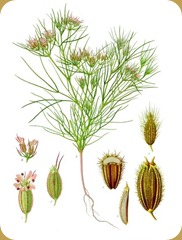
Cumin is one of the most common and known spice. It is used in almost all the dishes in Indian traditional culinary system. As per Bhav Prakash Nighantu (Ayurvedic Pharmacogonsy), jeerak has three types as following:
1. White
2. Black
3. Kalika
In above quotation from the text states that all three types of cumin behold almost similar properties.
Latin name:
Cumin seed (white) – Cuminum cyminum
Black caraway seeds (Black) – Carum carvi
Nigella seeds (Kalika/ Black cumin) – Nigella sativa
All three varieties of Cumin are dry in nature and pungent in taste. They are hot in potency and stimulate digestive fire. Cumin is light to digest and helps in containing the stools, so it can be given in people suffering with irregular lose bowel habit. It has a special effect on brain and strengthens the memory. In my opinion it could be an effective herb in cases of Irritable Bowel Syndrome where in patient passes frequent lose motions along with stress. Cumin seeds are known for its properties of uterine cleansing. It is an effective herb in cases of dysmenorrhoea. Ladies suffering with painful menstruations can take a hot infusion during their menstruation. It helps in alleviating Vata, regulates menstruation, and cleanses uterus as well. Pregnant women should avoid taking cumin in large quantities due to its vasodilatation effect and heating property. It also helps in reducing fever by generating sweat.
As per ancient wisdom of life, cumin seeds promote digestion and also enhance sexual vigour. It is a stimulant, thus works on erectile dysfunctions. Cumin also increases strength. It could be because of its property of stimulating metabolic digestion which helps in a thorough absorption of micro nutrients from the food. It also enhances taste of the food and alleviates Kapha. Cumin helps in lacto genesis so it could be given in small quantity to lactating mothers.
Bhav Prakash says, cumin helps in promoting eye sight, and removes gaseous bloating of abdomen, vomiting, and diarrhoea. It is also a very good diuretic and could effectively be used in urinary tract problems.Cumin seeds contain 2.4 – 4% volatile oil which contains cumin aldehyde which could be converted in thymol. It can be used as antiseptic. It is one of the safe and effective remedy in infants.
Monday, August 6, 2012
Ayurveda Herbs
The Bishop’s Weed (अजवायन /यवानी)
Carum copticum (B & H)
Trachyspermum ammi (Linn)
Ptychotis ajowan (DC)
यवानी पाचनी रुच्या तीक्ष्णोष्णा कटुका लघु: ।
दीपनी च तथा तिक्ता पित्तला शुक्रशूलहृत ॥
वातश्लेष्मोदरानाह गुल्म प्लीहक्रिमिप्रणुत ।
भा. प्र.
Bishop’s weed or Ajwain is one of the most famous herbs among folklore practices. Although it is not very commonly used among spices but it has been herbs of choice in house hold remedies. Ajwain is carminative, and enhances taste of the food. It is pungent bitter in taste and sharp in action. Ajwain is hot in potency and increases Pitta. Metabolic taste of Ajwain is bitter and it is light to digest. It stimulates digestive juices and promotes the gastric absorption. Due to hot in potency, if consumed in excess quantities or for a prolonged duration it may result in gastric burning. Repetitive consumption in over doses may have adverse effect in spermatogenesis due to contradictory properties of Ajwain and sperms.
Ajwain alleviates Vata and Kapha and it is specifically prescribed in colic pain due to gaseous distention. It contains volatile oil which is constituted 40 – 50 % of thymol. As the traditional wisdom says, “it helps in removing worms (Krimi pranut).” Thymol is known for its anthelminthic properties. And famously used for hookworm treatments. Thymol is also known to have certain antimicrobial properties. Probably that is the reason why Ajwain is so potent in cases of gaseous bloating of abdomen and dysentery. It could be used in amoebic dysentries. As per Ayurveda, Ajwain also helps in splenic disorders. It is also believed that thymol is effective in removing certain fungal infections of finger nails and toe nails. It would be advisable for people suffering with fungal infections of nails to wash the nails with decoction prepared with Ajwain seeds for two to three times a day.
Due to its strong odor it is used in removing foul smell from many pungent oils especially of castor oil. In chronic dry cough it can be used effectively to remove Kapha. In cases of asthma (shwas) Ajwain powder in prescribed dose is given with hot water. Powder of Ajwain mixed with Epsom salt is known to cure chronic indigestion in folklore practices, and factually it is effective. Although people suffering with hypertension should be careful about the dose as it contains salt.
In pain abdomen, rheumatic pains and joint pains poultice is prepared and used for fomentation of local area to eradicate pain. Pitta Prakriti people should refrain from excessive internal consumption of Ajwain as it may aggravate thermodynamics of the body.
Friday, August 3, 2012
Ayurveda Herbs
Latin Name – Piper nigrum
मरिच कटुकम तीक्ष्णम दीपनम कफवातजित ।
उष्णम पित्तकरम रुक्षम श्वास शूल क्रीमीन्हरेत ॥
तत आर्द्रम मधुरम पाके नातिउष्णम कटुकम गुरु ।
किंचित तीक्ष्णगुनम श्लेष्मप्रसेकी स्यादपित्तलम ॥
भा प्र
Black pepper probably is the one of the most used spice all across the globe. It is widely used to enhance the taste and also to provide a flavor to the food. Ancient wisdom of Ayurveda says, it is pungent in taste, sharp in action and stimulates digestive fire. It is known for its potential action over Kapha and Vata. Black pepper, due to its property of being hot, helps in liquefying the Kapha. Due to this property it becomes a drug of choice in cases of chronic cough wherein sputum is very sticky and creates congestion in respiratory system. That is the reason why in cases of Bronchial Asthma fine black pepper powder is advised for internal use. It immediately helps in broncho dilation due to stimulation effect and mobilizes the phlegm from bronchioles. It contains an alkaloid called piperin which makes this herb an excellent catalyst.
Black pepper increases digestive juices and stimulates digestive fire. In cases of gaseous bloating and chronic indigestion it is considered to be an effective medicine. It is hot in potency, so should be avoided by Pitta personalities and people with skin sensitivities. It is dry in nature, so effective in obesity for proper fat metabolism and may increase cellular activity.
Black pepper is traditionally known for its anthelminthic effect for ages. It is given in very small doses along with green tomato to kids in folklore practices. It can also be used in cases of tooth ache in form of decoction for gargles.
High doses of this herb may result in abdominal pain, and urethral burning. Excessive use of black pepper in food as spice and flavor may result in stomach burning and gastritis. So it should be consumed in low quantity under the physician supervision only.
Metabolic taste of tender or green form of the pepper is sweet. It is not so hot in potency and heavy to digest. It is good mucolytic and also increases pitta. One pinch of the black pepper powder along with one tea spoon of honey at night helps in relieving the respiratory congestion and as per traditional believe also enhances the immunity of respiratory tract.
Tuesday, July 31, 2012
Ayurveda Herbs
Latin Name – Zingiber officinale
आर्द्रीका भेदिनी गुर्वी तीक्षणोष्णा दीपनी मता।
भा प्र
In cases of common cold and cough where in mucous is not thoroughly drained, Ginger along with honey is given to produce mucolytic effect. Ginger contains zingirol and 1- 3 % of volatile oils. Dry form of ginger is an effective herb for abdominal colic. Essentially it is given in form of hot infusion. Dry ginger powder is considered very effective in Hypovolemic shock to restore peripheral blood circulation. It is rubbed constantly on hands and feet to restore thermodynamics.
Ginger is hot in potency, so it should be cautiously used in Pitta personality types and also Pitta disorders. It aggravates Pitta, so it should be avoided in cases of Gastritis as it may result in gastric irritation and symptom like epigastric burning may increase. Hypertensive patients should use ginger in moderate quantity only.
My suggestion, people suffering with hypertension should avoid smearing it with salt. Instead Epsom salt can be used.
Saturday, February 4, 2012
Vedic Management - 5 Steps to Holistic Success (Part 2)
- Organizational goal
- Analytical abilities
It is the intimate desire to materialize the futuristic approach. Without a
goal, any organization would behave like a small boat lost in the pacific. It works
like a guiding star, and also a gauge. It is essential that the vision should
not be a mere tool of self amusement. Vision of your organization should be
multidimensional. It should revolve around the sense of uplifting one and all. The
vision of your organization should not be motivated out of greed, but it should
be an effort to motivate the mass for a revolution. And the organizational goal
should be complemented by achieving short term targets. And one should make
sure to share the organizational vision with each and every part of it, living,
or non living. It generates the required passion and also works as a yardstick
whenever you lose focus.- Service feedback
- Managerial feedback
- Communicative feedback
- Personal feedback
Disclaimair
Views and articles published on this blog are the sole property of the author. And unauthorized use is prohibited in terms of printing, publishing, reproducing, presenting without prior permission. Articles are meant for the purpose of general awareness and for further advice and utility of Ayurveda treatments, consult your Ayurveda physician.
© 2014 Dr. Ashutosh Guleri All Rights Reserved